Small Wood Shop Ideas
Small wood shop ideas and tips for setup from a professional.
Many home woodworking shops aren't very big, so maximizing the space you do have is pretty important.
f you want the most efficient small woodworking shop possible, start with one honest snapshot: do you have a shop or area you can use right now? A garage bay, basement corner, shed, or spare room can all work—but efficiency comes from planning around what you actually have, not what you wish you had.
How big is it? Grab a tape measure and note the usable footprint (length × width), ceiling height, and the “no-go zones” you can’t change (water heater, furnace, stairs, car parking area, door swing, posts). These constraints drive your layout more than any “perfect” floor plan you see online.
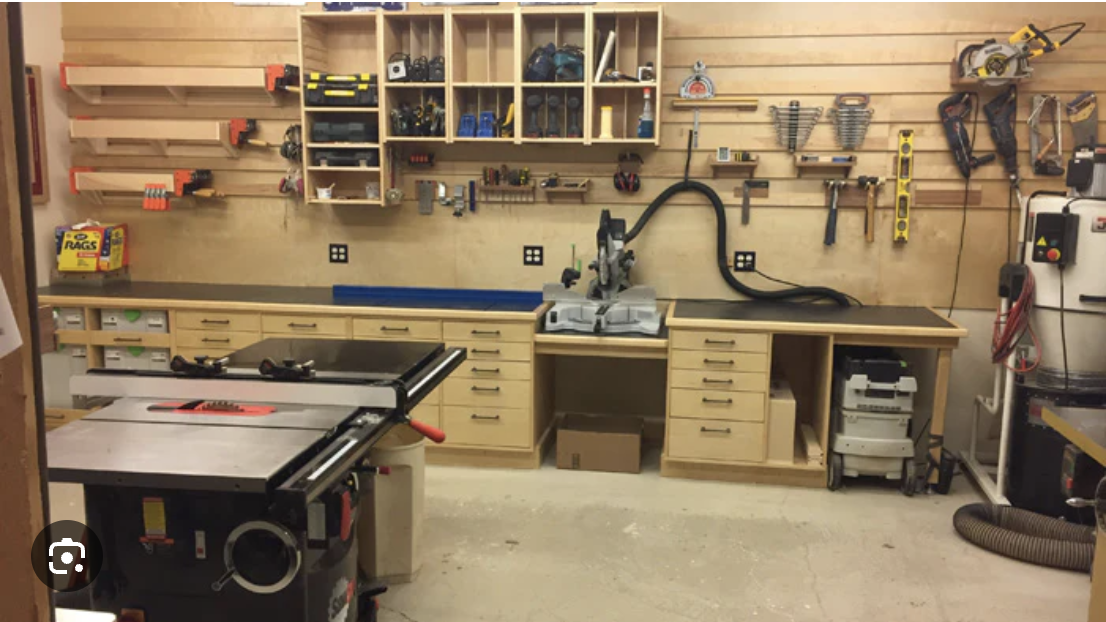
One side of a clean and organized small wood shop.
What Type of Woodworking Will You Do & What about The Future?
Next, list what kind of woodworking you want to focus on: furniture, cabinets, small boxes, turning, or home repair. Different work changes everything—especially your material storage, dust collection needs, and the kind of bench space that makes sense.
Before you move a single tool, map your workflow like a little factory: material comes in → rough cut → milling/flattening → joinery → assembly → sanding → finishing → shipping/stacking. The best small wood shop ideas reduce backtracking and keep the “messy” operations (milling/sanding) away from finishing and clean assembly.
A great trick in tight spaces is to pick one “spine” wall as your storage and utilities wall: lumber rack, clamps, hand tools, chargers, vacuum/dust lines, and maybe your air filtration. Then keep the center more open so you can roll machines out only when needed.
What tools are you starting with? Write down every tool you already own—even the shop vac and the sawhorses—because your wood shop set up should be built around what you can use today without constant rearranging.
What About Future Woodworking?

Careful planning can avoid future headaches.
Try our popular small wood shop ideas planning guide.
It comes with a 60 day money back guarantee and has many satisfied customers!
For most small-shop beginners, the core “wood shop tools and equipment” for general furniture work looks like: a solid workbench, a circular saw or table saw, a drill/driver, a sander, a shop vac, a few quality hand tools (chisels, square, marking knife, tape), and enough clamps to actually glue something up without fighting it.
If you’re doing a lot of cabinet or sheet-goods work, the priority may shift: track saw or table saw support, outfeed/assembly space, and a clean way to break down 4×8 sheets safely. In a small shop, “safe and repeatable” beats “fancy” every time.
Now list tools you might add later. This is where you future-proof: planer, jointer, band saw, router table, miter saw station, lathe, drill press, and a real dust collector. You don’t need to buy them now—you just want your layout to have a logical home for them so you don’t redesign the shop every year.
Small Wood Shop Set Up Space
And Careful Planning
One of the best small wood shop ideas is to choose machines that can share space. Example: a flip-top cart that holds a benchtop planer on one side and a spindle sander on the other; or a rolling cabinet that stores routers, bits, and doubles as an infeed support.
Workbenches deserve special attention because they’re the “control center.” Ask yourself what height of workbench you prefer. For hand-tool work, many people like it a bit higher for detail work; for heavy hand-planing, slightly lower gives you leverage. If you’re unsure, mock it up with scrap blocks and try planing, sanding, and assembly for 10 minutes each.
Also plan clearance around the bench: you’ll want room to clamp on all sides, walk around for assembly, and handle long boards without smashing into a wall. In a small shop, a bench on locking casters can be a lifesaver—as long as it locks rock-solid.
Electrical Needs for Your Small Shop
Electric tool requirements are where “efficient” becomes “frustration-free.” Make a list of every corded tool you’ll run and note its voltage (120V or 240V) and amperage. Then be realistic: what will run at the same time (dust collector + table saw, heater + compressor, etc.)?
If your shop area has an electrical panel nearby, you have options: dedicated circuits, 240V circuits, and a cleaner wiring plan. If you’re running power from somewhere else (like a single garage outlet), plan on limitations and prioritize: you might need to avoid running a heater and a big tool simultaneously.
Do you need outlets that are higher capacity than ordinary household receptacles? Many serious table saws, dust collectors, and some compressors want 240V. Even at 120V, dedicated 20A circuits reduce nuisance trips and voltage drop—especially in a garage where extension cords tend to get long and ugly fast.
Outlet placement is an efficiency multiplier. Put outlets where you actually stand: around the bench height for chargers and sanders, and higher on the wall for retractable extension reels. If you can, add at least one ceiling outlet for an air filter or cord reel so cords don’t snake across the floor.
Small Shop Lighting
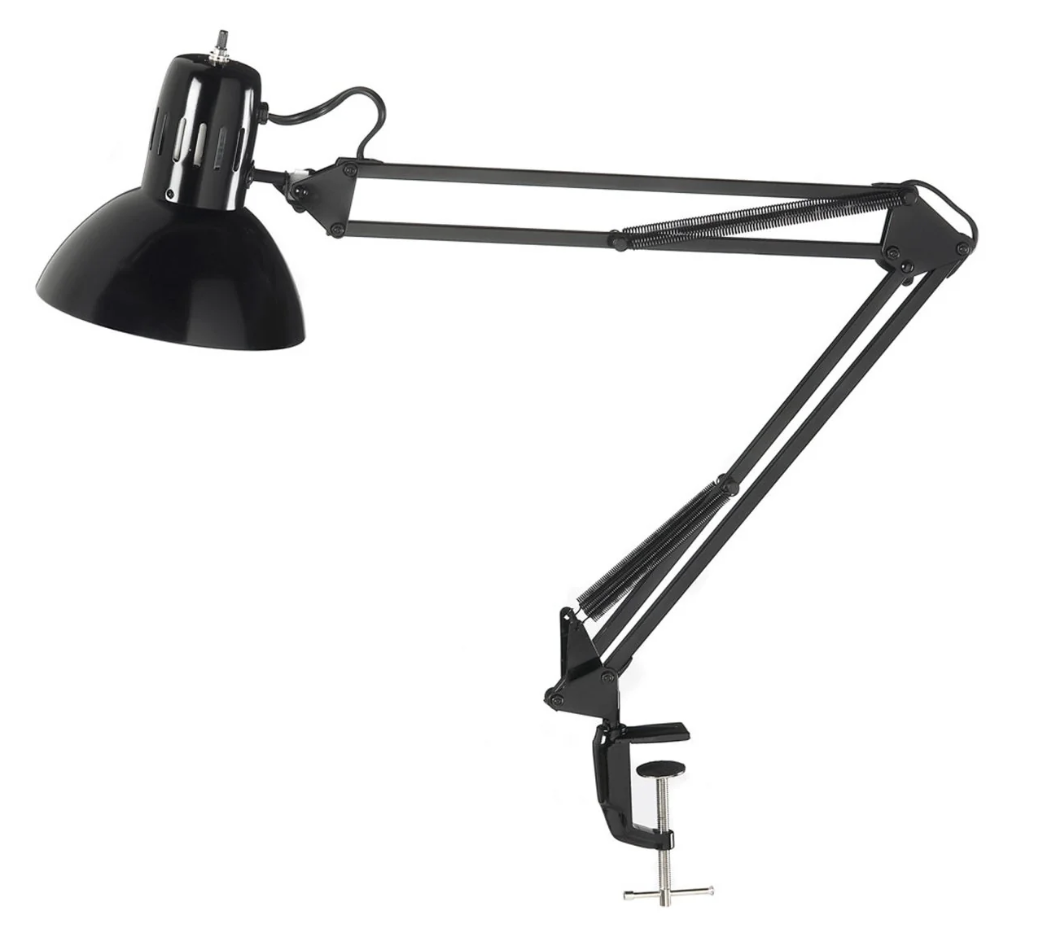
Here's an example of portable lighting that is flexible enough to throw light wherever you need it.
Simple and inexpensive if you shop carefully but also a big asset to have a couple of these in your shop.
Try our small wood shop ideas guide forcomplete shop layout planning.
Now lighting—because interior visibility means safety and accuracy. Aim for bright, even ambient lighting first, then add task lighting. Overhead LED fixtures (daylight color temperature) make a small shop feel bigger and help you see layout lines, grain direction, and surface defects.
Then add portable lighting where it matters: a magnetic gooseneck light on the drill press, an adjustable lamp near the bench, and a movable work light for finishing or inspection. Shadows cause mistakes, and mistakes waste time and material—exactly what an efficient shop is trying to avoid.
Tool storage and a tool board setup are where you win back minutes every session. Put the most-used hand tools in one arm’s reach of your bench: measuring/marking, chisels, mallet, hand planes, and your most-used screwdrivers and bits.
Pegboard works, but a French cleat wall is often sturdier and more flexible long-term. The real goal is simple: every tool has one obvious home, and you can put it away with one hand without shuffling three other things first.
Material storage is just as important as tool storage. Vertical sheet-good storage saves floor space, while horizontal lumber racks keep boards from warping (when done right) and make it easier to “shop your own inventory.” Store offcuts in a bin system so you don’t build a monster pile that collapses whenever you pull one piece out.
Do You Already have A Heat Source?
Heating: do you need it? If you’re working year-round in a cold garage or shed, heat isn’t a luxury—it’s what keeps glue curing correctly, finishes without cracks, and your hands working safely. The most convenient type depends on what’s available: electric, propane, natural gas, mini-split heat pump, or wood stove (where allowed).
What’s most affordable isn’t always what’s most efficient. Electric resistance heat is easy but can be pricey to run; a mini-split can be efficient and also provides cooling/dehumidification; vented gas is powerful but needs proper installation and ventilation. Whatever you choose, keep combustibles clear and plan air movement so you’re not heating the rafters while your feet freeze.
Ventilation and air quality matter even in a “tiny” shop. Finishing fumes, fine sanding dust, and even general stale air make the space unpleasant fast. If you can, plan a simple cross-vent setup (an intake opening and an exhaust fan) and consider a ceiling-mounted air filtration unit to grab lingering fine dust.
Dust Collection
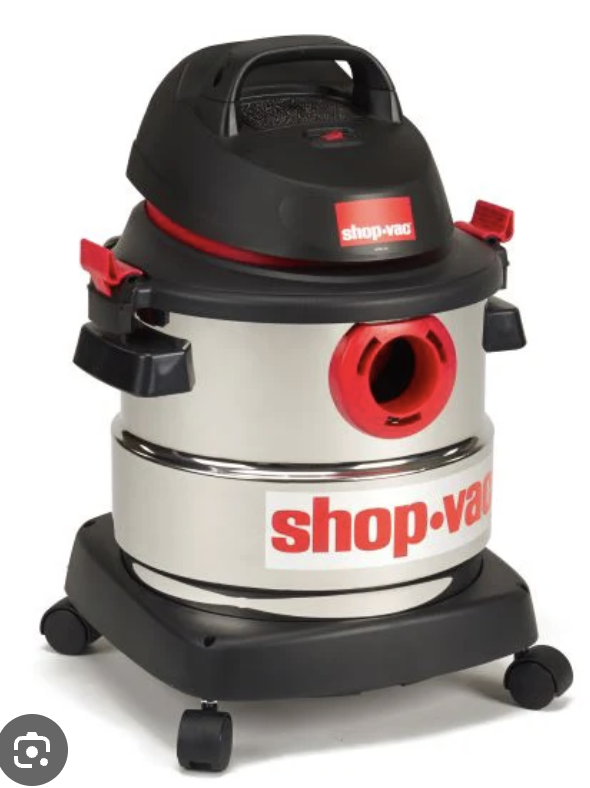
Start your dust collection with this type of simple solution.
You can always add the fancy stuff later.
Over time wood dust can cause health problems, so dust collection is an important step.
Dust collection is the biggest quality-of-air upgrade in most wood shops. If you want to start simple, buy a dust cyclone separator that mounts to a 5-gallon pail and connect your shop vacuum to it. It’s cheap, effective, and keeps filters from clogging every five minutes.
As you grow, think in stages: Stage 1 is shop vac + cyclone + good hoses and adapters. Stage 2 is adding a bigger extractor or small dust collector and dedicating quick-connects to the tools you use most. Stage 3 is hard piping or semi-fixed lines—only when your layout stops changing. That’s a smart “buy once, cry once” approach without wasting money early.
Last step: put your small wood shop ideas on paper before you build it—then walk it in real life with painter’s tape on the floor.
It’s the easiest way to envision your small wood shop ideas before you start building. Confirm your wood shop set up, and spot missing pieces (like where clamps should live, where lighting shadows fall, and where lumber actually enters the room).