Build A Shed Plans
Build a shed plans for over 12,000 shed styles, including lean to shed styles. The build it yourself shed plans include every detail and also extra large detail for things like joints and angles.
All shed drawings include measurements, material and tool list too!
Here are some sample build a shed plan designs that you can build yourself with
easy to follow plans.
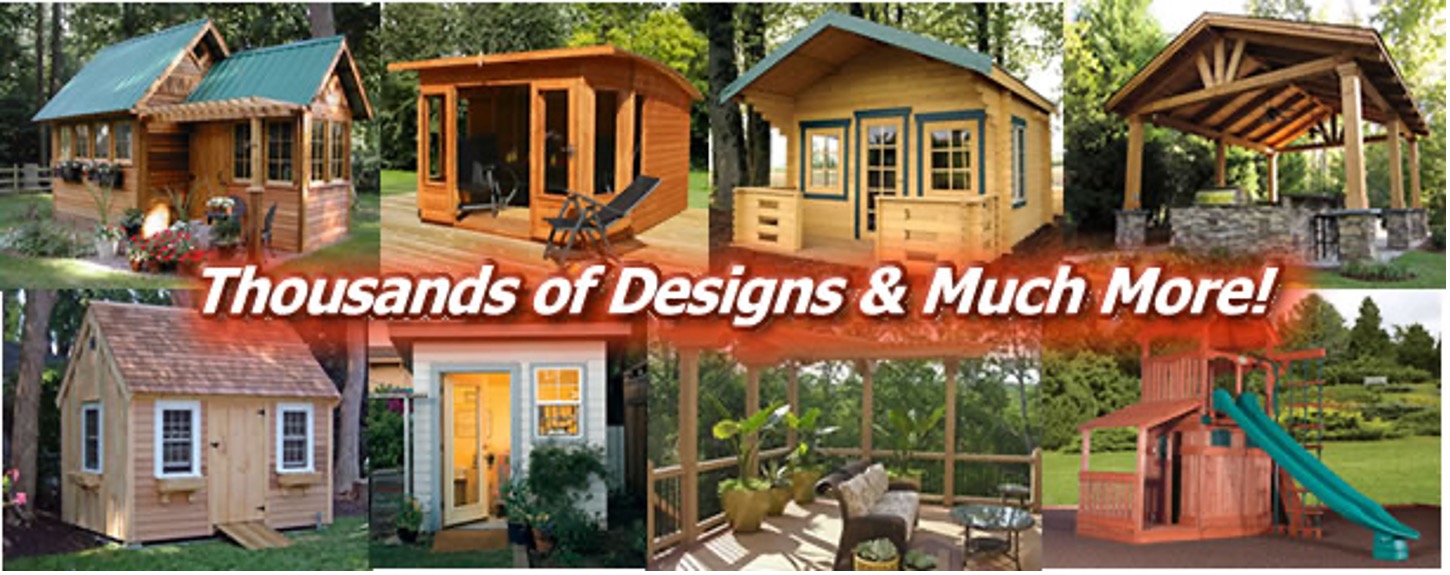
If you’ve been pricing backyard sheds lately, you already know the sticker shock is real—and the quality can be hit-or-miss. That’s why solid **build a shed plans** are such a game-changer: you get a shed that fits your space, your storage needs, and your standards, while keeping more money in your pocket. And honestly, there’s also that deep satisfaction of stepping back at the end and thinking, “Yeah… I built that.”
The best part is you don’t have to “wing it.” Great plans spell out the entire process: choosing a site, getting the foundation right, framing tight walls, setting doors and windows properly, picking roofing that lasts, and finishing it so it looks like it belongs on your property. If you want to go further, you can even build sheds for other people and turn a weekend skill into real side income—especially when you can offer choices from **over 12,000 shed styles**, including popular lean-to layouts.
This is what the **build a shed plans** include (and what cheap plans often skip). You want: complete measurements, cut lists, materials lists, tool lists, layout diagrams, framing details, joint/fastener notes, roof framing angles, door and window rough-opening specs, and step-by-step order of operations so nothing gets built out of sequence. Even better when the plans let you **print at any size you want**, so you can take a full-page detail drawing right to the saw without squinting.

Check Local Regulations
Before you cut a single board, start with the jobsite reality check. Pick a location that’s naturally high and drains well, and leave clearance around the shed for maintenance (painting, roof work, trimming vegetation). Look up local rules—many areas have limits on size/height, setbacks from property lines, and whether a permit is required. If your shed will hold heavy items (motorcycles, large tool chests, riding mower), plan for a stronger floor system and easier access (wider doors, ramp, or double doors).
A smart site choice is also about usability. Think about how you’ll walk to it in the rain, where the doors will swing, and whether you want the shed to face the house or tuck away. If you’re adding windows, consider sunlight direction—morning light is great in a workshop, harsh afternoon sun can cook the interior. And don’t ignore trees: branches overhead mean debris on the roof and faster shingle wear, plus roots can mess with foundations over time.
Now the foundation—this is where a “nice shed” becomes a “shed that stays square for years.” The right base depends on your soil, climate, frost depth, and intended load. Common options include a gravel pad with skids, concrete piers/blocks, or a concrete slab. Whatever you choose, the plan should emphasize one non-negotiable: get it **level, square, and stable**. If the base is twisted or out of square, everything you frame on top will fight you.
For piers/blocks, your plan should show exact locations and spacing so your beams and joists land where they should—especially under door openings and any heavy-load zones. For slab builds, plans should cover thickness, reinforcement notes, and anchor options for the wall plates. And in freezing climates, pay attention to frost movement: if your ground heaves, the most “perfect” framing job in the world can still rack over time.
Once the base is ready, you’ll frame the floor. Good **build a shed plans** will list joist size, spacing, rim joist details, and the fastening schedule (nails/screws/hangers). The big goal is a stiff platform that stays flat, because a wavy floor telegraphs problems into every wall. The plans should also show how to square the platform: measure diagonals corner-to-corner until they match, then lock it in.
Floor sheathing is where squeaks and soft spots are born—or prevented. Plans should specify thickness and grade, plus fastener spacing. When you lay sheets, stagger seams (don’t line up joints in a row), keep edges supported, and leave the recommended gap where needed for expansion. If you’re building a workshop shed, it’s worth planning for heavier sheathing and thoughtful blocking where you’ll anchor benches or shelving later.
Every little detail is included in the shed plans. Measurements, materials and tools list, and a 60 day money back guarantee.
Details for site prep, doors and windows - everything!
Complete Details Ensure High Quality
Structures When You're Finished
Wall framing is next, and this is where details like joints, corners, and layout really matter. Your plans should show stud spacing, top/bottom plates, corner assemblies, and how to frame for openings. When it comes to “blown-up details,” you want clear diagrams of: corner joints (so you can actually insulate or add interior sheathing later), how plates lap at intersections, and where to add blocking for hardware, shelves, or wall-mounted tools.
Openings for doors and windows shouldn’t be guesswork. Plans should specify the **rough opening** size, the king studs, jack studs, header size, and how the load transfers down to the floor. This is also where your shed stops looking homemade and starts looking professional: a properly framed opening stays square, the door swings cleanly, and the window sits flat without weird shims stacked like pancakes.
When you stand walls up, make sure to use the plan’s bracing and sequencing instructions. Typically you build each wall flat on the deck, sheath it (if the design calls for that), tilt it up, plumb it, brace it, then tie everything together with top plates. Don’t skip temporary bracing—wind can rack a wall in seconds. And always confirm plumb and square as you go; small errors compound fast on any building.
The roof is where strong plans shine, because it’s full of angles and repeatable cuts. Whether you’re doing rafters or trusses, you want clear rafter layout, ridge details, birdsmouth cuts (seat cut and heel cut), and overhang measurements. A quality plan will also call out the roof pitch and show how that pitch translates into the rafter angle cuts so you’re not guessing at the saw. This is exactly the kind of “detail blow-up” that separates confidence from frustration.
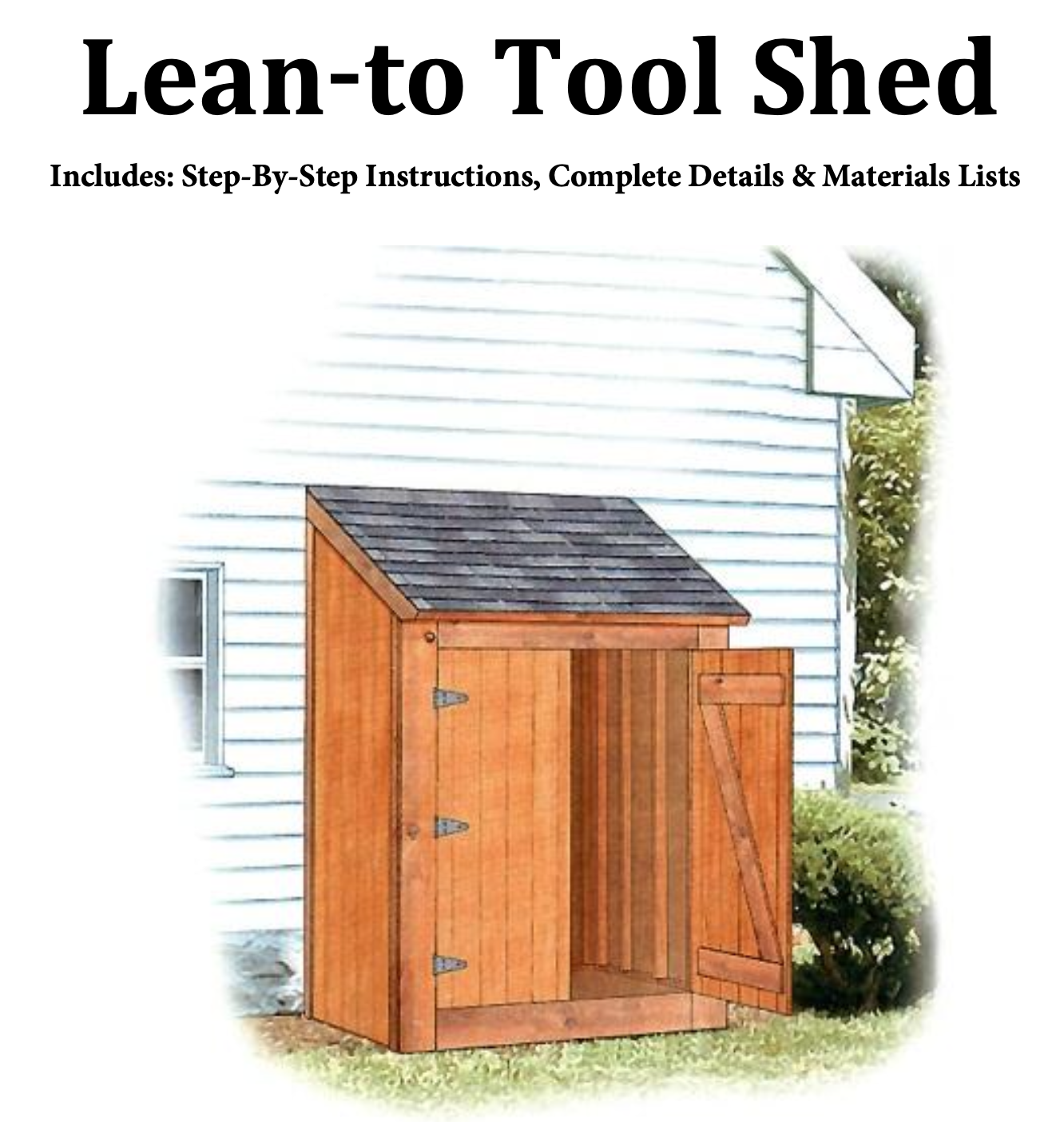
Want to build a lean-to shed?
Doesn't need to be fastened to a building if you may want to move it later.
Can be built with or without a back wall.
There are also plans included to **build a lean to shed**. Lean-to sheds use a single-slope roof that’s simpler to frame and sheds water well. Plans include the exact high-wall/low-wall height difference, rafter lengths, and flashing details where the roof meets any taller wall or structure (if it’s adjacent). Lean-tos are also great for tight side yards and for organizing long items like ladders and lumber.
Roofing materials matter a lot because they determine lifespan, noise, heat, and maintenance. Most DIY builders choose asphalt shingles because they’re familiar and easy to repair. Others prefer metal panels for longevity and fast installation. Your plans should guide you through underlayment, drip edge, ventilation options, and the correct fastening method for the chosen material. A roof that’s installed correctly is the difference between “dry storage” and “mystery leaks every spring.”
Doors deserve special attention because they take the most abuse. Plans should cover whether you’re building a framed door, using prehung doors, or doing double doors. For double doors, the plan should include details like: hinge placement, header sizing above the opening, latch/hasp hardware blocking, and how to keep doors from sagging (bracing layout is key). A shed door that doesn’t bind is a daily convenience you’ll appreciate every single time you use it.
Windows can turn a dark box into a usable workspace, and they also make the shed look finished. Your plans should specify window type, rough opening, flashing approach, and trim details. Installed correctly, a window should have a water-managed system: sill flashing/drainage plane, side flashing, then top flashing so water is always directed outward. Even if you’re not doing interior insulation, good weather sealing keeps out drafts, bugs, and wind-driven rain.
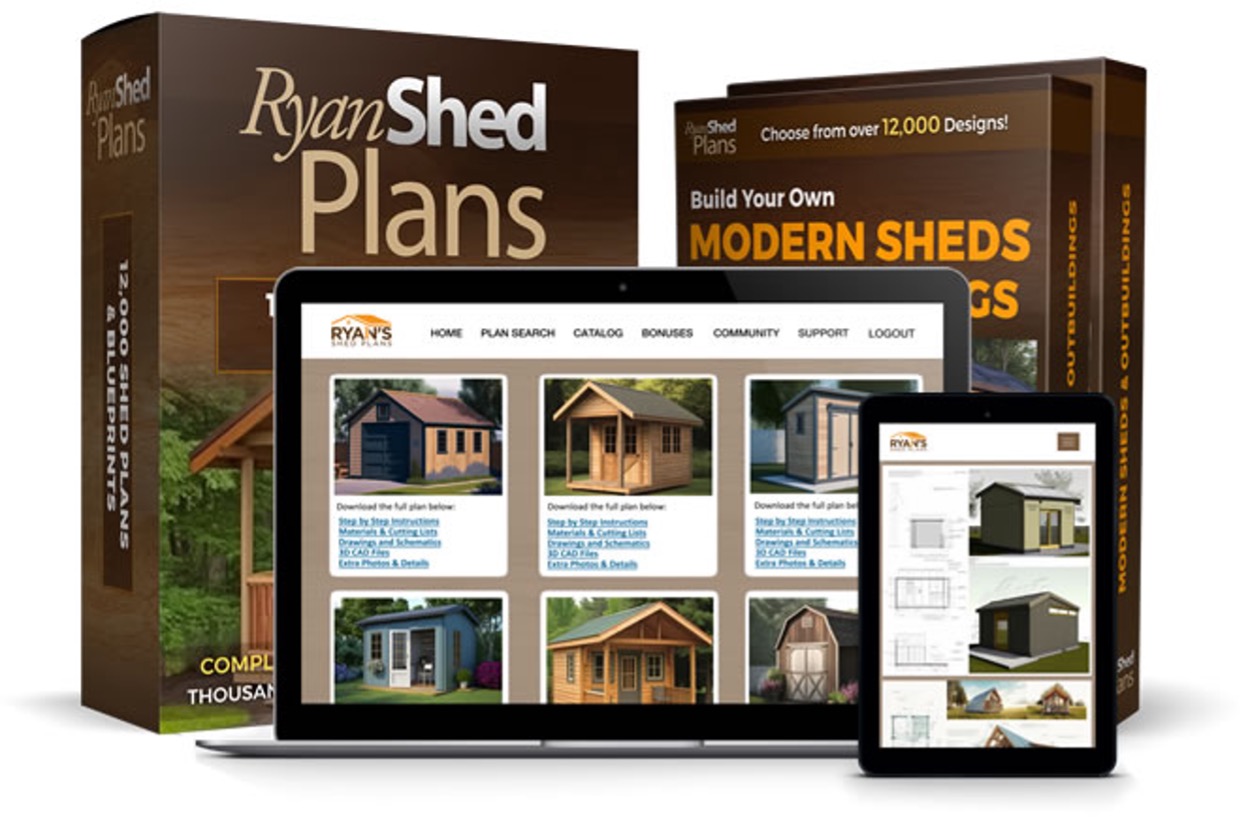
Over 12,000 shed designs to choose from.
Build a shed plans for any style you want.
60 day money back guarantee!
Plans Include Exterior Finish Tips Too
Exterior sheathing, house wrap (if used), siding, and trim are your shed’s armor. Plans should show panel layout, nailing schedules, and how corners are finished so they’re strong and crisp. Then you finish with fascia, soffit choices (if any), corner boards, and caulk lines where appropriate. This is also where you can customize the look—board-and-batten, lap siding, engineered panels, or even matching your home’s style.
The finishing touches are what make it feel “high-end”: paint or stain, clean trim lines, straight caulk beads, quality hinges, and a roof edge that looks sharp. If you’re painting, plans should remind you about surface prep and priming where needed, plus timing around weather. Add simple upgrades like vents, a ramp, shelving, pegboard, or a small workbench layout. This is the part that really appeals to people who want to save money and do something creative for themselves—because it becomes *your* shed, not just a storage box.
If your goal is a **build it yourself shed** that beats the quality of many store-bought options, the right plan set is the shortcut: complete measurements, materials and tool list, clear angle/joint details, and a step-by-step build order you can follow without second-guessing.
A build it yourself shed can give you a high quality shed cheaper than buying one and give you the satisfaction of doing something for yourself.
And if you want variety, having access to **over 12,000 designs** (including lean-to styles) means you can build exactly what you need now—and build for others later too if you choose. Best of all, you can print the plans in any size you want, and they come with a **60-day satisfaction guarantee**, so you can move forward knowing you’re covered.